Sep 13, 2026Procurement and Logistics Guide
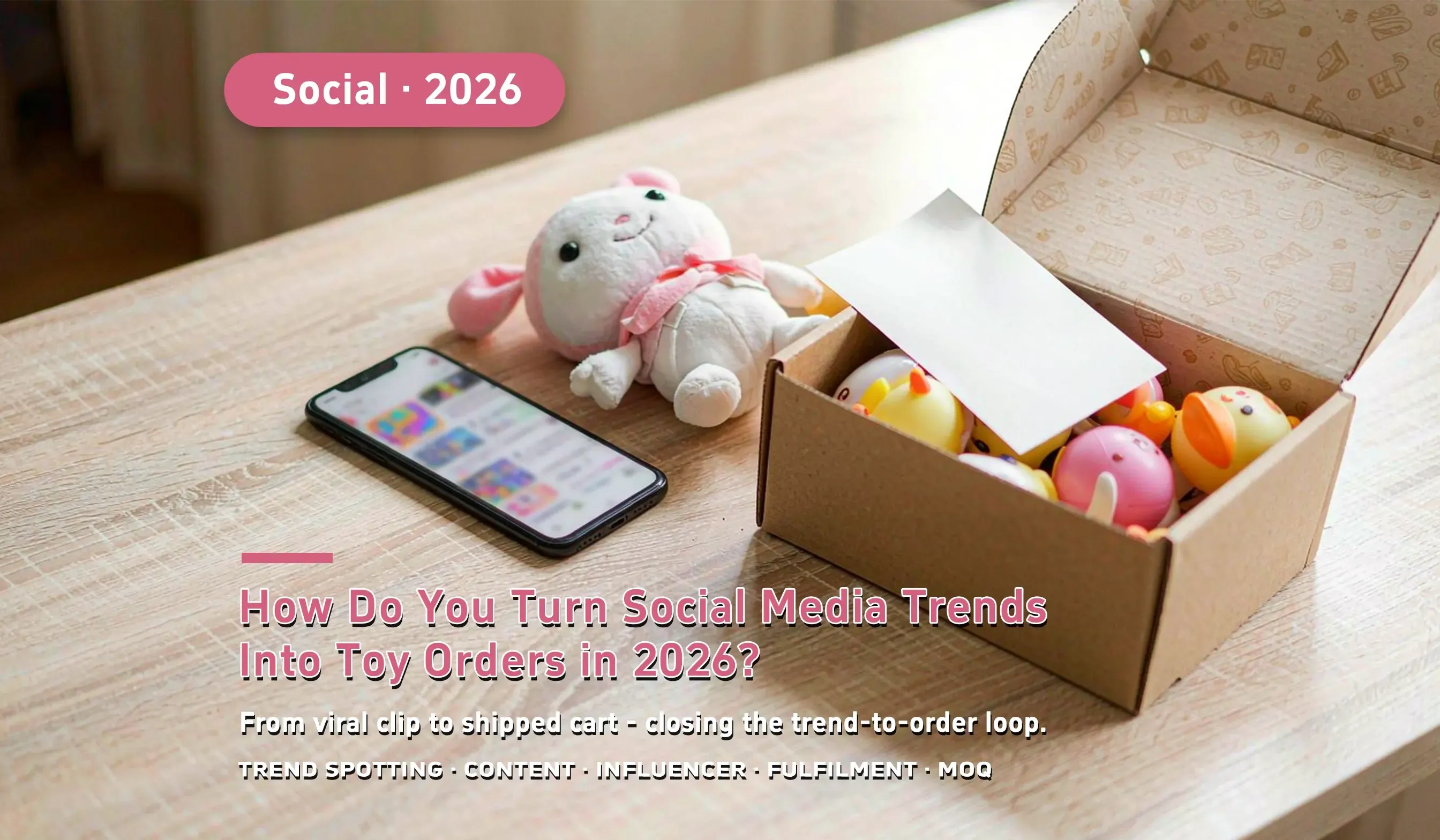
How Do You Turn Social Media Trends Into Toy Orders in 2026?
How to turn social media trends into toy orders: read purchase intent not just views, validate with small batches, and avoid IP traps. Original, EN71-compliant sourcing by InLuv Toys.
Why a million views doesn't mean a million orders
Views and likes measure content performance. They tell you someone stopped scrolling. They don't tell you they want the toy in their house.
A clip can pop because of the creator, the edit, the dog in the background, or a strong opening hook. The product itself may be ordinary. Pull it out of that video and the magic often disappears.
So split the data into two questions:
- Content metric: did they watch?
- Commerce metric: did they want to buy?
A product with moderate traffic but a pile of "where to buy" comments will usually beat a two-million-view clip with nothing but "cute!" and emoji.
Three data layers worth actually checking
Level 1 — Purchase intent in the comments. Count matters less than content. "Where can I buy this?", "do you have the link?", "how much?" are buying signals. "LOL" and heart emojis are not. The higher the share of comments asking to buy, the stronger the signal.
Level 2 — Sustained, cross-creator engagement. One viral post can be creator appeal, not product appeal. The same toy showing up across three unrelated accounts, different audiences, different styles — that's product appeal. Look for consistency, not a single spike.
Level 3 — Add-to-cart and conversion. This is the final test. The path is simple: social traffic → product page → cart → order. Social tells you they noticed. Conversion tells you it's a business. A moderate-traction product with real conversion is safer to scale than a huge-traction one that nobody actually buys.
What each metric really tells you
Metric | What it shows | Sourcing value |
|---|---|---|
Views | reach | low |
Likes | basic engagement | low–medium |
Saves / shares | stronger interest | medium |
Purchase-intent comments | buying curiosity | high |
Repeat across creators | product-level consistency | high |
Add-to-cart rate | commercial intent | very high |
Order conversion | real demand | highest |
The further the customer moves toward paying, the more the data is worth.
A workflow that doesn't burn inventory
- Cross-check the trend. Don't bet on one screenshot. Search the product across 2–3 creators and content styles. One creator can make anything look good.
- Check buying signals. Links, product tags, store landing pages, "where to buy" comments. Content tied to a real purchase path beats pure entertainment.
- Validate with a small test. Pick a few promising SKUs, list them in your channel, and watch inquiry rate, sell-through, returns. Small-batch validation is the bridge between a trend and a bulk order.
- Scale only after conversion. Strong conversion → reorder. Mixed → keep testing. Weak → cut exposure. Simple, and it keeps dead fads from filling your warehouse.
The filter that comes before all of this: is it original?
Here's the part most sourcing posts skip, and it's the one that ends toy businesses.
Most viral toy content is a copyrighted character or branded look — a cartoon mouse, a streaming show, a game skin. If you source it because the clip blew up, you don't get orders. You get a takedown that freezes your listings and your account, and possibly a customs seizure.
So before you even validate a trend, ask one question: is this original non-IP? If it copies a character or a brand, walk away. No conversion data justifies an IP lawsuit.
Second part of the same filter: trending is not certified. Even a legitimately original trend still needs EN71 / ASTM per SKU, correct age grading, and battery docs for electronic sets. Social proof does not clear customs. This is where a sourcing partner earns the fee — we screen trends for IP and certification before you commit a test batch, not after.
How InLuv Toys turns trend signals into safe orders
We're a Chenghai-based sourcing partner, not a factory, and we treat social trends as a starting signal, not a buying decision:
- Original, non-IP designs. We won't source a copied viral look, no matter how hot.
- Per-SKU EN71 / ASTM test reports, CoC, and material declaration (ABS virgin, BPA-/lead-/phthalate-free).
- AQL 2.5 inspection and production video on every lot, so bulk matches sample.
- Low-MOQ mixed cartons (one carton, many styles) — the small-batch validation step, made practical.
- 30% deposit / 70% against B/L. Your importing entity holds local cert (SNI / TISI / QCVN / SIRIM / INMETRO / NOM / GCC); we supply the test files underneath.
FAQ
How do I know if a viral toy will actually sell?
Watch purchase-intent comments and cross-creator repeat, not views. Then run a small-batch test and scale only on real conversion.
What social media metrics matter most for toy sourcing?
Purchase-intent comments, repeat across unrelated creators, and add-to-cart or conversion. Views and likes are the weakest signals.
Should I trust TikTok trends for toy importing?
As a discovery tool, yes. As a buying decision, no. Validate with small batches and an IP check first.
How do I avoid IP problems with viral toys?
Only source original non-IP designs. If a trend copies a character or brand, skip it regardless of how strong the engagement looks.
How much should I test before scaling a trend?
Start with a low-MOQ mixed carton of a few promising SKUs, track sell-through and returns, then scale only what converts.
Turn a Trend Into a Safe Order:👉 [Request a Quote at InLuv Toys] · send us the trend you're watching and your target market, and we'll screen it for IP and certification, then send original-design options + per-SKU compliance files + a tailored quote within one business day.
Website: www.inluvtoys.com
Email: henry@inluvtoys.com
Phone / WhatsApp / WeChat: +86-13411918746